Local Link Building: How to Get Backlinks Without an Agency
Stop wasting money on agency retainers and spammy directory blasts. Learn the exact playbook for earning high-quality local backlinks through real-world relationships, community sponsorships, and hyper-local content.
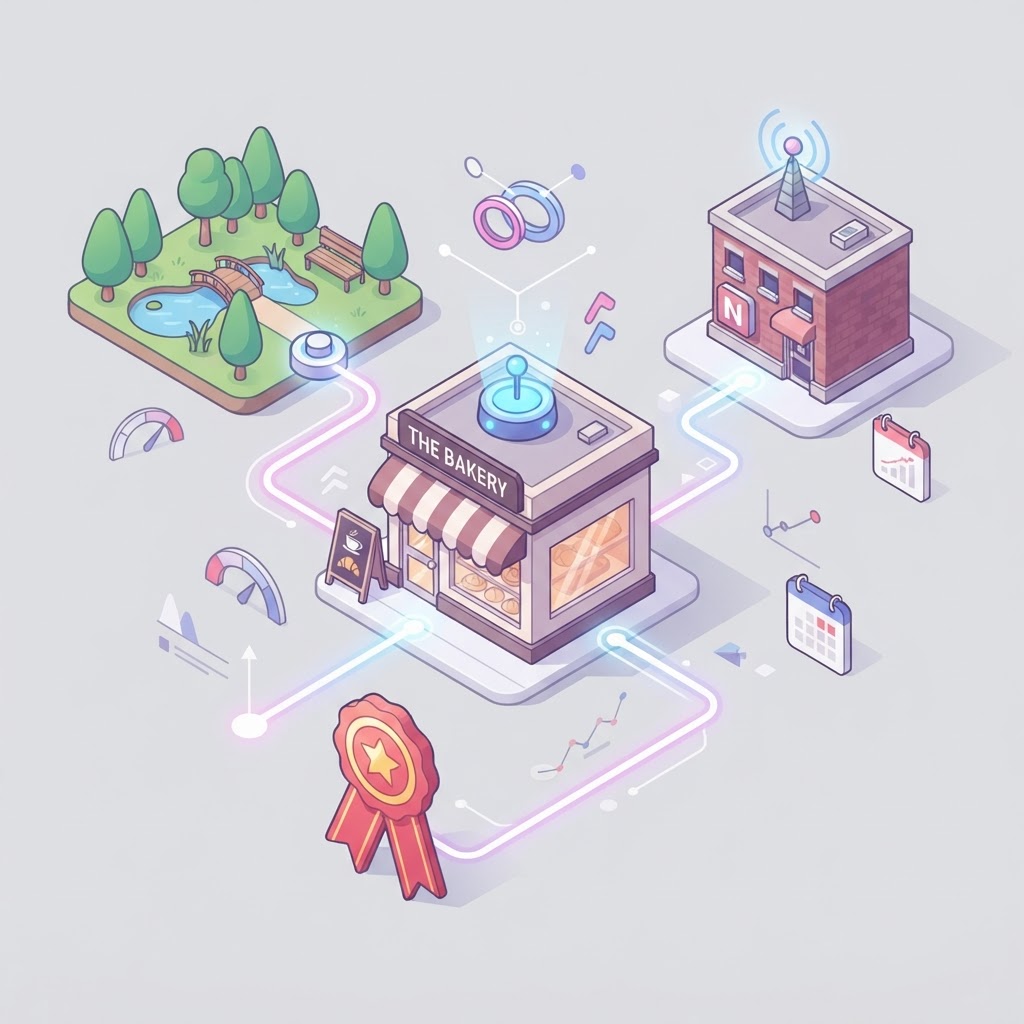
If you run a local business, most of the link-building advice you find online is completely useless to you. National SEO blogs will tell you to run massive cold-email outreach campaigns, execute the "skyscraper technique," or pay an agency $3,000 a month to secure guest posts on high-authority tech blogs.
Stop. If you are a plumber in Austin, a dentist in Chicago, or a landscaper in Denver, a backlink from a national marketing blog does very little to help you rank in your specific city.
See how clearly your website communicates your location and services.
InspectRank reviews your local visibility signals and gives you a clear, prioritized report.
Get My Free ReportLocal link building requires a completely different playbook. It is not about mass outreach or gaming domain authority metrics. It is about turning your real-world, offline relationships into online authority. You do not need an expensive agency to do this. You just need to know where to look.
Why Local Link Building is Different (And Easier)
In traditional SEO, the goal is often to acquire links from websites with massive Domain Rating (DR) scores. But as noted in 13 Local Link Building Tactics to Boost Your Visibility - BrightLocal, local link building is about acquiring links from sites that are location-specific to your area of operation.
Google's local algorithm cares about proximity and relevance. A link from a local neighborhood association with a DR of 12 is often far more valuable for your local map pack rankings than a link from a generic national business blog with a DR of 70. Google uses these local links to verify that you are a real, active participant in your specific geographic community.
This is great news for small businesses. It means you don't have to compete with massive corporations for links. You just have to be the most connected business in your hometown.
Create a side-by-side comparison table titled "Traditional vs. Local Link Building."
- Traditional SEO: Focuses on high Domain Authority, national relevance, cold email outreach, and scalable content like "Ultimate Guides."
- Local SEO: Focuses on geographic relevance, local community ties, real-world relationships, and hyper-local content like "City Pricing Guides."
Strategy 1: The Vendor and Partner "Flip"
The easiest backlinks to get are from people you already give money to, or people who already give money to you. This is the lowest-hanging fruit in local SEO, yet most business owners completely ignore it.
Think about the software, suppliers, and contractors you use to run your business. Every single one of them wants to show off happy customers.
How to execute this:
- Write a killer testimonial: Reach out to your local suppliers (e.g., the local lumber yard if you are a contractor, or the local commercial kitchen supplier if you are a restaurant). Offer to write a detailed testimonial for their website. In exchange, they will almost always link back to your website next to your name and company logo.
- Offer yourself as a case study: If you use a specific local accountant, IT service, or marketing tool, tell them you'd love to be featured in a case study about how their service helped your business grow. Case studies naturally include backlinks to the subject's website.
- Cross-promote with complementary businesses: If you are a wedding photographer, you likely work alongside the same florists, venues, and caterers every weekend. Create a "Preferred Local Vendors" page on your site and link to them. Then, send them a quick email letting them know, and ask if they have a similar page where they might feature you.
As highlighted in Local Link Building Strategies That Work, these opportunities arise naturally from relationships that already exist, making them highly credible in the eyes of search engines.
Strategy 2: Hyper-Local Sponsorships and Digital PR
You probably already donate to local causes or sponsor local events. If you aren't getting an SEO benefit from those offline activities, you are leaving money on the table.
Local organizations are almost always looking for funding, and they almost always have a "Sponsors" page on their website. These links are incredibly powerful local signals.
Where to look for local sponsorships:
- Youth Sports Teams: Sponsoring a Little League team or a local high school soccer team usually costs a few hundred dollars. In return, you get your logo on a banner and a backlink from the league's website.
- Local Charities and 501(c)(3)s: Animal shelters, food banks, and community theaters frequently list their corporate sponsors online.
- Community Events: 5K runs, summer festivals, and holiday parades need local business sponsors.
The execution rule: Before you write a check, check the organization's website. Do they have a sponsor page? Do they actually link out to their sponsors? If they only list names without links, politely ask the organizer if they can include a link to your site so their members can easily find your services.
Strategy 3: Create Locally Linkable Content
Most small business blogs are filled with generic, AI-generated garbage like "5 Tips for Better Plumbing." Nobody is going to link to that. If someone wants generic plumbing tips, they will read Home Depot's website.
To earn local links, you must create content that is highly specific to your geographic area. You need to answer the exact questions your local customers are asking.
Examples of linkable local content:
- Local Pricing Guides: "How Much Does a New Roof Cost in Denver in 2026?" People link to data. If you provide transparent, local pricing data, other local businesses and real estate agents will link to it as a resource.
- Local Regulations and Permits: "The Complete Guide to Building Permits in Austin." If you simplify a confusing local government process, you become the definitive resource.
- Neighborhood Guides: If you are a real estate agent or a local service provider, creating detailed guides about specific neighborhoods (schools, parks, utility providers) is highly linkable.
When you create content that actually serves your community, it naturally attracts links from local forums, community boards, and other local businesses.
See how clearly your website communicates your location and services.
InspectRank reviews your local visibility signals and gives you a clear, prioritized report.
Get My Free ReportStrategy 4: Un-Spammy Directories and Associations
Ten years ago, SEOs would buy 500 directory links for $50. Today, that will get your site penalized. However, legitimate, highly-curated local directories still matter.
You should ensure your business is listed on the major platforms (Google Business Profile, Apple Maps, Bing Places, Yelp). But beyond the basics, look for hyper-local and industry-specific associations.
The directories that actually move the needle:
- The Local Chamber of Commerce: Yes, it costs money to join. But a link from a local Chamber of Commerce is one of the strongest local trust signals you can send to Google.
- Industry Associations: If you are a member of a national or state-level professional association (e.g., the State Bar Association, the National Roofing Contractors Association), ensure your profile includes a link to your website.
- Alumni Associations: If you graduated from a local university, check if they have an alumni business directory. Educational (.edu) links carry significant weight.
Strategy 5: Leverage Social Search and Community Platforms
While links from platforms like Reddit, Nextdoor, and local Facebook groups are typically "nofollow" (meaning they don't pass direct SEO authority in the traditional sense), they are becoming increasingly vital for local visibility.
Search engines are evolving. As noted in 10 Ways Any Business Can Earn Local Backlinks | Amsive, establishing a reputation by consistently answering questions on local subreddits or community boards builds your online visibility. When you genuinely help people on these platforms and drop a link to a relevant, helpful resource on your site, you drive highly qualified local traffic.
More importantly, when real people discover your content through these platforms, they are more likely to share it on their own websites or blogs, leading to natural, "dofollow" backlinks.
The Multiplier Effect: Internal Linking
Getting a great local backlink to your homepage is fantastic. But if your website's internal linking structure is broken, that authority stops at the front door.
Think of link authority like water pouring into a bucket (your homepage). Internal links are the pipes that distribute that water to the rest of your house (your service pages). If you don't have pipes, your most important pages stay dry.
As highlighted in Local Link Building Strategies That Work in 2026, external links bring authority into your site, but internal links determine where that authority flows.
Whenever you acquire a new backlink, ensure the page receiving that link has clear, contextual internal links pointing to your core service pages and location pages. Use natural anchor text. Don't just link the words "click here"—link descriptive phrases like "emergency plumbing services in downtown Seattle."
What to Avoid: The Penalty Zone
When you are desperate for links, it is easy to fall for scams. Avoid these tactics at all costs, as they will actively harm your local search rankings:
- Fiverr Link Blasts: Anyone promising 1,000 backlinks for $20 is using automated software to spam comment sections and fake blogs. Google will ignore them at best, and penalize your site at worst.
- Private Blog Networks (PBNs): These are networks of fake websites created solely to sell links. Google's AI is incredibly good at detecting and devaluing PBNs in 2026.
- Exact-Match Anchor Text Stuffing: If every single link pointing to your website uses the anchor text "best roofer in Miami," it looks completely unnatural. Real people link using your brand name, your URL, or conversational phrases. Keep your anchor text profile natural.
The Bottom Line
Local link building in 2026 is not about tricking an algorithm. It is about proving to Google that you are a real, trusted, and active member of your local community.
You do not need an agency to do this. Start by looking at the checks you write every month. Reach out to your vendors, sponsor a local team, join the Chamber of Commerce, and create content that actually helps your neighbors. The links—and the local rankings—will follow.
Sources & references
See what InspectRank finds on your website
Get a clear report covering website SEO, technical health, local visibility and AI search readiness.
Get My Free ReportRelated guides
How to Optimize Your Small Business for 'Things to Do' Local Searches
Struggling to rank for 'things to do' in your city? Learn how local entertainment and hospitality businesses can use Barnacle SEO, Google Business Profile optimization, and hyper-local content to capture tourist and local search traffic.
The SEO Impact of Using a Virtual Receptionist or Answering Service
Discover how missed calls damage your local search rankings and why using a virtual receptionist or answering service can protect your Google Business Profile.
How to Optimize Your Small Business for In-Car Navigation Systems
Cars are becoming search engines on wheels. Learn how to optimize your local business for in-car navigation systems like Google built-in, Apple Maps, and TomTom.

The SEO Dangers of Using Stock Photos on Local Service Pages
Do stock photos hurt your local SEO? Learn why generic images destroy customer trust, kill image search traffic, and drag down your Google rankings.
Local SEO for YMYL Businesses: Ranking Medical Spas, Therapists, and Clinics
Ranking a medical spa, therapy practice, or clinic requires navigating Google's strict YMYL guidelines. Learn how to use E-E-A-T, practitioner profiles, and symptom-based SEO to dominate local healthcare search.